

Blog
Luis Buñuel and Documenta Madrid 2026: documentary cinema
From Buñuel's surrealism to Documenta Madrid 2026's “Taking the Pulse”: a different (and very real) way to experience Madrid.
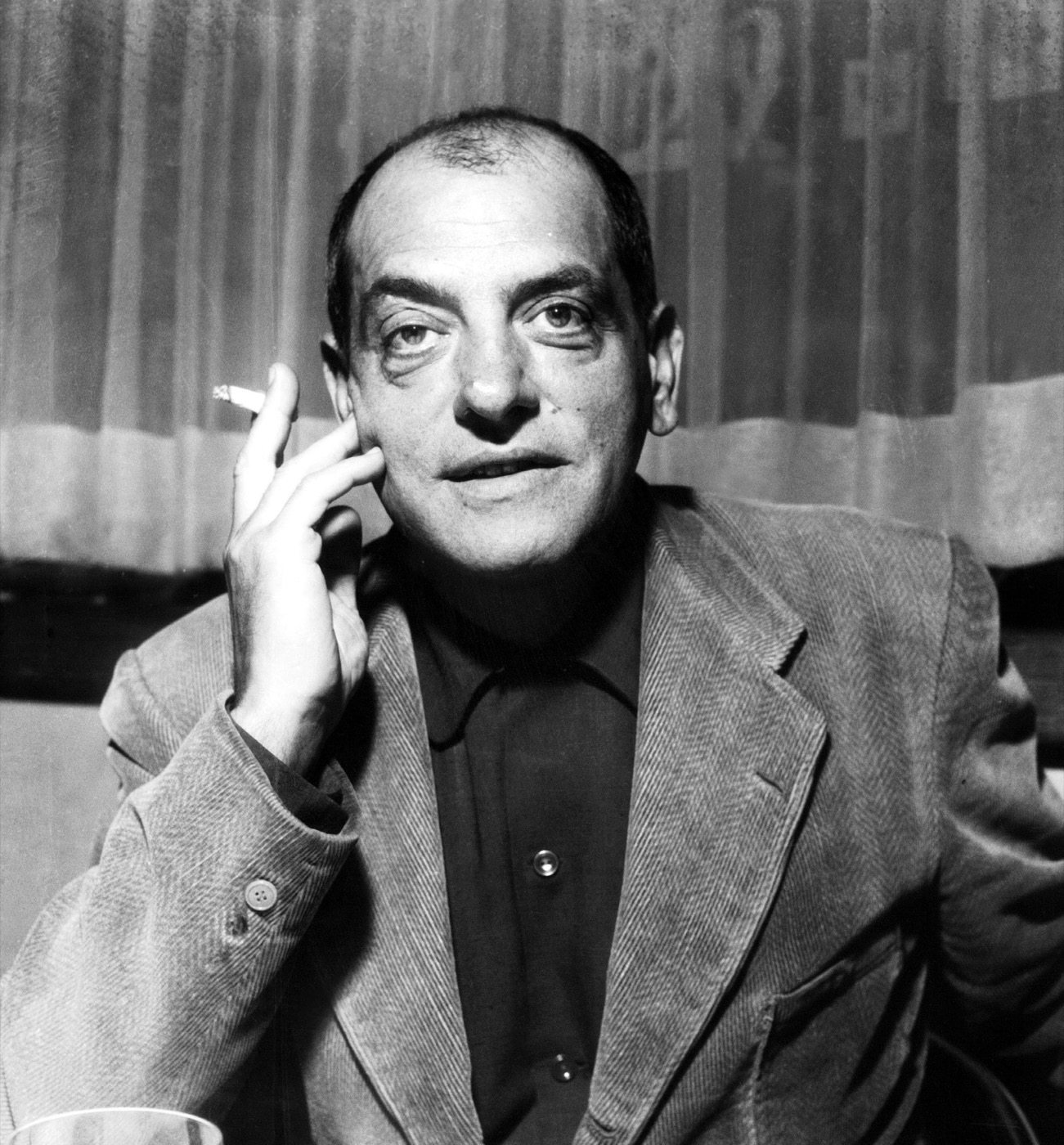
Madrid can feel like a sprint: Gran Vía, museums, terraces, photos, “tick” and onto the next thing. But if you’re travelling with that sense of “I’m missing something,” of the city rushing past you instead of settling in, there’s a simple and very Madrilenian antidote: sit in a cinema and let a story change your pace. Luis Buñuel understood this before anyone else: cinema isn’t just entertainment; it’s a way of looking directly at things (the beautiful, the uncomfortable, and what no one wants to see). And in 2026, Madrid is getting serious again — in the best sense — with Documenta Madrid, the festival that turns the city into a conversation, a memory, and questions without easy answers.
Buñuel: the Aragonese filmmaker who made cinema an uncomfortable question
Luis Buñuel was born in Calanda (Teruel) in 1900 and died in Mexico City in 1983; between those dates lies a career that seems written by someone who hated straight lines: he studied in Madrid, immersed himself in avant-garde movements, shook Paris with surrealism, filmed some of the harshest social films of the 20th century in Mexico, and returned to Europe to dismantle — with black humour and cruel elegance — the rituals of the upper class, rigid morality, and respectable hypocrisy.
In Madrid, Buñuel didn’t just “pass through”: he was shaped here. He arrived young at the Residencia de Estudiantes (Student Residence) in 1917 and connected with a cultural ecosystem that would be a permanent trending topic today: Federico García Lorca, Salvador Dalí, endless debates, friendships mixing art, politics, desire, and provocation. This period is key because it explains his creative character: Buñuel quickly learned that talent doesn’t live in isolation; it thrives in conversation (and friction). Later, in 1925, he went to Paris with a head full of ideas and an instinct he never lost: if an image can disturb, it’s probably a useful image.
The surrealist shock: when cinema stopped “behaving”
His entry into legend comes with surrealism: Un perro andaluz (1929) and La edad de oro (1930) open a new door, not so much for “being weird” but for refusing to obey the logic of comfort. Buñuel understood that the human mind doesn’t work like a perfect script: it works with impulses, traumas, desires, and symbols. And that, put on screen, doesn’t leave you indifferent: you either reject it or take it home with you.
Buñuel is often labelled a surrealist (rightly so), but if you stop there, you miss the most interesting part: his obsession with reality. Even when a scene seems absurd, Buñuel is pointing to something concrete: power, poverty, morality, class, everyday violence, religion as a social structure, desire as an uncontrollable driving force. This connection to the tangible world is crystal clear in Las Hurdes / Tierra sin pan (1932), a work Britannica lists as a documentary and which functions like an ethical punch: it doesn’t invite you to “look” from above; it forces you to question your perspective.
Then there’s the Mexican turning point, where Buñuel filmed with a rare and powerful mix of rawness and humanity. Los olvidados (1950) isn’t just a film about children and poverty; it’s a film about how society creates margins and then feigns surprise at seeing them. In 1951, Buñuel won the Best Director award at Cannes for Los olvidados (listed as “Award for Best Director 1951” on the official Festival website).
If you think about it, this “street-level” Buñuel is a direct sibling of contemporary documentary: cinema as a tool to see what’s hidden, to focus where there’s no focus, to recover memory, to narrate the invisible. It’s no coincidence that when Madrid turns to documentary, the city asks the same of you as Buñuel asked of his audience: attention, honesty, and the stomach for complexity.
The European phase: religion, class, and desire under an unforgiving light
In the 1960s and 70s, Buñuel returned to filming in Europe and sharpened his scalpel. Viridiana (1961) is one of those titles that explain why he’s called an “uncomfortable” filmmaker: Cannes awarded it the Palme d’Or (ex aequo) in 1961, not for being “pleasant,” but for daring to touch sacred subjects without asking permission.
Later came The Discreet Charm of the Bourgeoisie (1972), a satire with an elegant appearance that’s actually a demolition: dinners that don’t happen, rituals that repeat, conversations that sound empty… as if the upper class were a soulless choreography. At the 1973 Oscars (45th edition), the film won the award for Foreign Language Film representing France, as noted on the official Oscars.org site.
With Buñuel, something fascinating happens: the more you read/watch, the more you understand he didn’t want to “shock for the sake of shocking.” He wanted the viewer to leave the cinema a little less automatic. And that, for a traveller, is gold: travelling is also about learning not to see on autopilot.
So… what is Documenta Madrid?
Documenta Madrid is the International Documentary Film Festival organised by the Área de Cultura, Turismo y Deporte (Department of Culture, Tourism and Sport) of the Madrid City Council. The 2026 edition will be the 23rd, with Cineteca Madrid (Matadero Madrid) as its main venue and a programme that also extends to other cultural institutions in the city (according to Matadero itself: Filmoteca Española, Museo Reina Sofía, La Casa Encendida, and Goethe-Institut).
Mark this down if you’re planning a cultural trip: Documenta Madrid 2026 takes place from 26 to 31 May 2026, with Matadero Madrid / Cineteca Madrid, at Plaza de Legazpi, 8 (Arganzuela), as its main location.
The most interesting thing about Documenta isn’t just “watching documentaries” but the why. On the City Council’s website, the 2026 edition is presented under the philosophy of “Taking the Pulse”: re-understanding our surroundings and using documentary cinema to do so. They mention, for example, Pasolini’s gesture of going out into the streets of Rome in 1970 to understand a strike, and they highlight diversity of perspectives, origins, and sensitivities as a central focus of the festival.
And this is where Buñuel and Documenta come together: both ask something very simple and very difficult at the same time — to look closely. To look without romanticising, without simplifying, without turning reality into a souvenir.
What a documentary festival feels like
Some festivals feel like a red carpet, and others like a library: Documenta Madrid is one of the latter, but with a warm heart. A well-curated documentary isn’t a “lesson”; it’s an experience. You enter a cinema thinking you’re going to see someone else’s story and leave with a new idea about your own life, your neighbourhood, your country, or your way of remembering. Sometimes you laugh (yes, that too), sometimes you leave in silence, sometimes you need to talk to someone for five minutes to process what you’ve just felt. That’s why this kind of festival fits so well with solo travellers or cultural visitors: it gives you a real meeting point with the city, not just its surface. And Madrid, with venues like Cineteca and the cultural ecosystem around it, has that quality of “after the screening, the conversation continues” — on a quiet terrace, on a walk along Madrid Río, at a simple dinner where no one pretends to know more, only to have felt something.
If Buñuel were in Madrid today, he probably wouldn’t tell you “go to this place”; he’d say something more useful: stop looking for a perfect city and look for a true one. The Buñuel who grew up in Madrid learned that culture isn’t a monument; it’s a movement. The Buñuel who filmed in Mexico understood that reality hurts when you look at it closely. The Buñuel who won Cannes and the Oscar kept laughing — in his own way — at solemnity. Documenta Madrid 2026 aims to do something similar: take the pulse of the city and the world, without pretty filters, with stories that leave you with questions.
And that’s where Adventure fits as a concept: not as “just a bed,” but as a base for people travelling with curiosity. If you like cinema, you like layered cities. If you like layered cities, you need a place to rest, work, cook something simple, and, above all, share (if you feel like it) what you’re discovering. The rest is the usual: Madrid will be fast if you decide so; but it can also be profound if you make space for it.
Blog
Sigue leyendo
10 bares clásicos para un vermut en Madrid
Descubre 10 bares clásicos de Madrid donde disfrutar de un vermut auténtico. Conoce horarios, precios y direcciones desde Malasaña.
Chamberí Sound cierra hoy con un concierto sorpresa gratuito en la plaza
El festival Chamberí Sound concluye hoy con un concierto sorpresa gratuito en la Plaza de Chamberí. Descubre cómo llegar desde Malasaña y qué hacer antes.
Metro gratis en Madrid con bici este fin de semana (18-20 septiembre)
Aprovecha el metro gratis con tu bici en Madrid del 18 al 20 de septiembre. Descubre horarios, consejos prácticos y planes para disfrutar esta oportunidad.