

Blog
San Isidro 2026: Events and History of Madrid's Patron
Learn about San Isidro, Madrid's patron saint, and explore the key events of San Isidro 2026, including Pradera festivities and traditional customs.
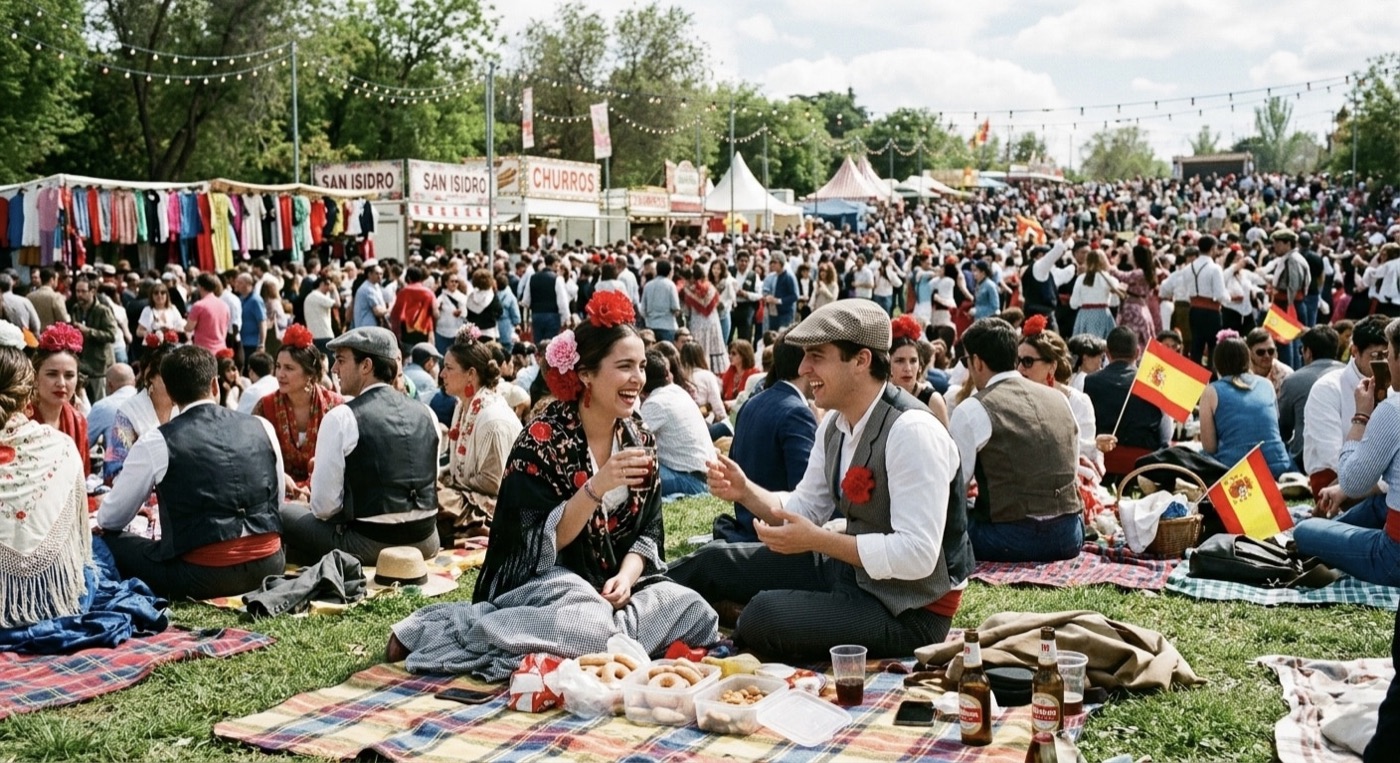
If you visit Madrid in May, there’s one day when the city embraces its traditional side without asking for permission: people with carnations, chulapos and chulapas (traditional Madrid attire), rosquillas (doughnut-like pastries) in hand, and El Retiro park 'competing' with another green space that takes centre stage that day: the Pradera de San Isidro. But behind the festival lies a real figure (albeit wrapped in legend) who explains a lot about Madrid: San Isidro Labrador, a humble worker turned city symbol.
Coming to experience Madrid 'for real' (festivals, neighbourhoods and people)? At Adventure Hostel, it’s easy: head out, come back, shower, change, and keep going.
Who was San Isidro (the historical figure, no filters)
San Isidro is, above all, a popular saint: his biography is rooted more in oral tradition, miracles, and medieval accounts than in modern documents. In fact, the Portal de Bibliotecas de Madrid notes that medieval sources are scarce and many details are conjecture, placing his life roughly between 1082 and 1172.
His full name is cited as Isidro de Merlo y Quintana, and the earliest accounts of his life are linked to a medieval manuscript known as the 'Codex of Juan Diácono,' written in the late 13th century. It recounts miracles and offers a brief biography: Isidro was a farmer and well-digger, married, a father, with few possessions, devout and charitable, and was buried in the Church of San Andrés.
This blend of a simple life and miraculous tales is key to his appeal: he’s not a 'palace saint' but a saint of the streets, of work, of mud... and that fits Madrid’s identity like a glove.
Why he’s Madrid’s saint (and why his story resonates here)
San Isidro is the patron saint of Madrid and also the protector of agriculture. The Ayuntamiento (City Council) sums it up with a powerful phrase: he was a layman, married to Santa María de la Cabeza, with a child, and a biography of deeds and miracles. He was canonised in 1622 by Pope Gregory XV (in a famous ceremony in Plaza Mayor).
Why does Madrid claim him as its own? Because tradition ties him to three very Madrid-like things:
Even historically, the traditional festival narrative includes a procession and a fountain: the Portal de Bibliotecas de Madrid notes that the major traditional festival began with a procession from San Andrés to the Hermitage of the Miraculous Fountain, linking the fountain to a construction initiated in 1528 by Empress Isabel (in gratitude for her son’s recovery).
1) The Pradera and 'the saint’s water'
The festivities revolve around the connection between water and the saint: the pilgrimage takes place in the Pradera de San Isidro, and it’s customary to drink the 'saint’s water' from a spring next to the Hermitage of San Isidro. It’s one of those traditions that connects you to centuries of the city: religious, popular, and festive all mixed together, no need to understand it 'perfectly' to enjoy it.
2) Rosquillas: listas, tontas… and a story with its own character
In Madrid, May smells of rosquillas. Turismo Madrid links the 'rosquilla myth' to Tía Javiera, a 19th-century vendor (real or legendary, but firmly in the city’s imagination), and explains the classic types:
Local tip: on San Isidro’s day, you don’t 'try just one'; you go for the combo. A lista and a tonta (plain) is the bare minimum.
3) La Maya (Lavapiés): spring, Goya-inspired aesthetics and a BIC
Before the 15th, Madrid warms up with traditions like Los Mayos–La Maya (3 May 2026 in Lavapiés), a festival declared a Bien de Interés Cultural (Asset of Cultural Interest) by the Comunidad de Madrid. It’s a very visual scene: a girl or young woman dressed in traditional attire and a shawl presides over a temporary altar, with music, traditional dances, carnation distribution, and a final floral offering.
4) The 'cultural San Isidro': the museum and the miracle well
If you’d like to understand San Isidro beyond the festival, there’s a perfect plan: the Museo de San Isidro. Los Orígenes de Madrid, which explores the city’s history and includes a section dedicated to the saint. The museum itself highlights the 'Miracle Well' as a must-see, linked to the tradition of his son’s rescue.
San Isidro 2026 events: what’s confirmed and what’s coming soon
Turismo Madrid’s guide places the San Isidro 2026 festivities from 8 to 17 May and highlights the essentials: Pradera, lemonade, and rosquillas. It also notes that the full 2026 programme will be published in late April/early May, so it’s best to check the official channel closer to the date.
Even so, several key events have already been announced in the official ecosystem:
San Isidro is best enjoyed with a central base: you can pop back to Adventure in no time and save your energy for the good stuff.
Blog
Sigue leyendo
Madrid con bajo presupuesto: cómo disfrutar la ciudad sin gastar de más
Descubre cómo disfrutar Madrid con bajo presupuesto: alojamiento, planes gratis y dónde comer barato. Consejos prácticos desde el centro de Malasaña.
Aviso amarillo en Madrid: la AEMET activa la alerta por temperaturas de hasta 38º
La AEMET activa el aviso amarillo en Madrid por temperaturas que alcanzarán los 38º. Consejos, planes y cómo moverse desde Malasaña.
Dónde dormir en Malasaña: opciones para todos los presupuestos
Descubre dónde dormir en Malasaña, desde opciones cómodas y accesibles como Adventure Hostel Madrid hasta todo lo que el barrio ofrece a pie de calle.