

Blog
Maruja Mallo: biography, key works and artistic impact
Learn about Maruja Mallo's life, major works, and her influence on modern art in Spain, from her Madrid years to exile and late recognition.
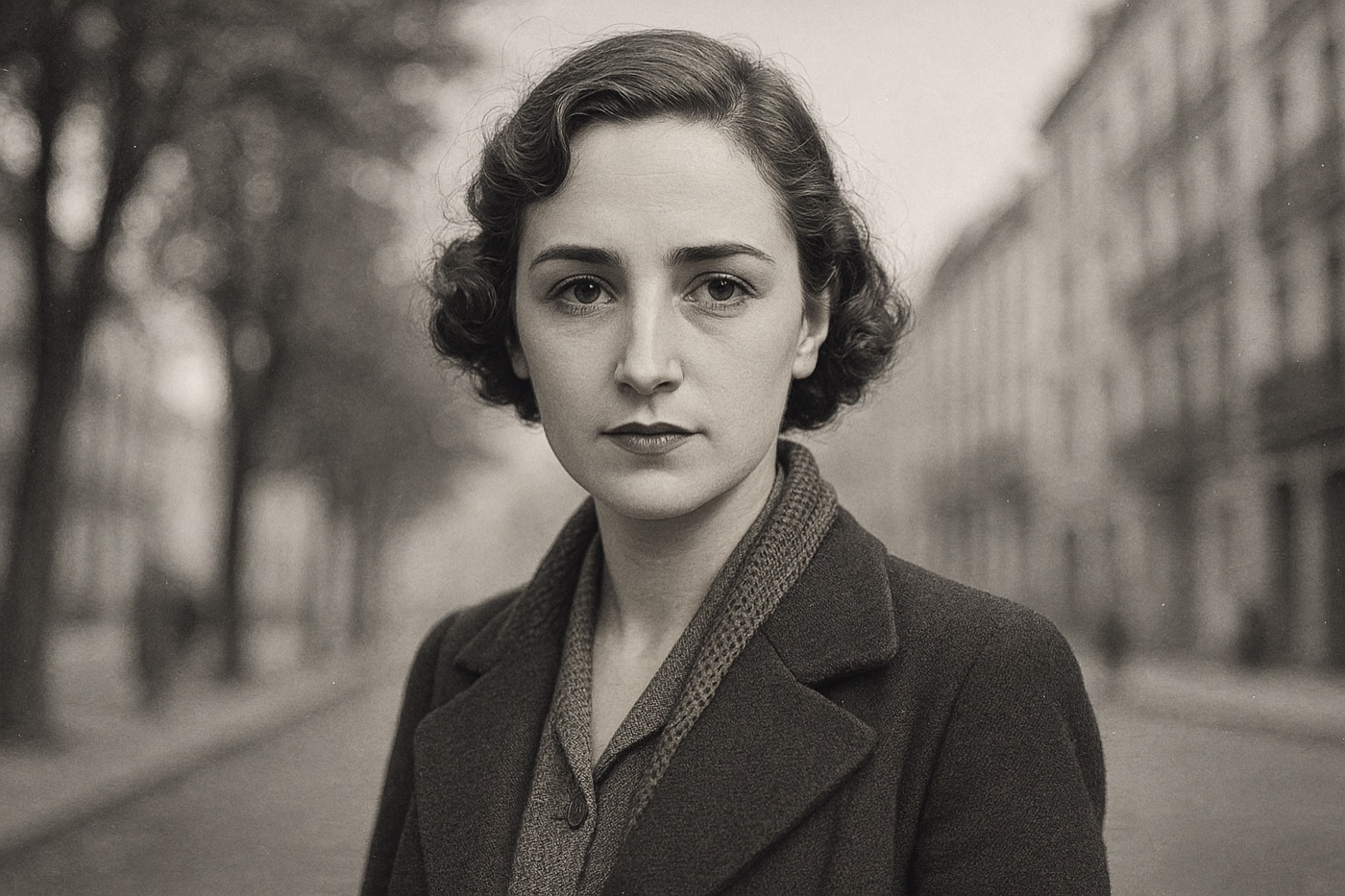
Maruja Mallo (Ana María Gómez González, Viveiro, 1902 – Madrid, 1995) is one of the most distinctive voices of modern artistic movements in Spain. Educated in 1920s Madrid and connected to the circle of the Generation of '27, her work bridges the popular and the cultured, the urban and the mythical, with an energy that still feels fresh today. This article explores her key periods: education, avant-garde breakthrough, war and exile, return, and late recognition.
Origins and education (1902–1926)
Born in Viveiro (Lugo), Mallo moved to Madrid with her family in the early 1920s. In 1922, she enrolled at the Real Academia de Bellas Artes de San Fernando (Royal Academy of Fine Arts of San Fernando), where she studied alongside artists like Salvador Dalí and became involved with the intellectual circles of the Residencia de Estudiantes (Student Residence). This network—poets, filmmakers, philosophers—fostered an experimental and free-spirited approach that soon became evident in her painting and her way of engaging with the city.
Her early works already reveal a hybrid perspective: sensitivity to popular culture and attention to the new urban geometries (ironwork, railings, façades). Rejecting traditionalism, Mallo turned everyday life into a formal laboratory.
Between 1927 and 1928, her first truly personal series took shape: the verbenas (street fairs).
Madrid and urban modernity: verbenas and the city (1927–1929)
Between 1927 and 1928, her first truly personal series took shape: the verbenas. These are scenes of Madrid's popular street fairs, interpreted with geometric rhythms, unusual perspectives, and a highly modern sense of framing, almost cinematic. Colours become bold, and movement is both the subject and the method: garlands cutting across the canvas diagonally, lights repeated like modules, and figures appearing more as symbols than portraits.
In 1928, Ortega y Gasset hosted a solo exhibition of Mallo's work in the Revista de Occidente (Western Review) gallery, a milestone that secured her place within the avant-garde. The Madrid of cafés, cinemas and nocturnal strolls was not just a backdrop: it became material for invention.
Myth, body and labour: towards her own poetics (1930–1936)
At the start of the 1930s, Mallo incorporated classical motifs (Demeter, masks, agricultural cycle iconography) and crafted a religion of labour that elevated human effort. Works like 'La sorpresa del trigo' (The Surprise of Wheat, 1936) embody this synthesis: strict geometry, archaic symbols and colours that oscillate between solemnity and vitality. The artist brought myth to the streets and the streets to myth.
This period also included other explorations—beaches, architecture, sports—where the body emerged as the measure and rhythm of the modern world.
War and American exile (1936–1962)
The outbreak of the Spanish Civil War disrupted her career in Spain. In 1937, she began an exile that took her to Argentina and Uruguay, with travels and stays in Chile and other Latin American countries. In Buenos Aires, she connected with the circles of the magazine 'Sur' and exhibited frequently, embedding herself in a broader cultural map.
In the Americas, two highly recognisable cycles emerged:
Exile was not a pause but a relocation of her laboratory: Mallo absorbed landscapes, masks and rhythms from other geographies without losing her unique syntax.
Today, Maruja Mallo is essential for understanding the female creators of the Generation of '27—known as 'Las Sinsombrero' (The Hatless)—and for interpreting a Spanish modernity that defies a single style. Her legacy sparks discussions on gender, city life, popular culture and myth; it also reminds us that the avant-garde can be celebratory without losing its rigour.
Quick questions (for readers in a hurry)
Who was Maruja Mallo? A Spanish avant-garde painter, linked to the Generation of '27, who renewed popular themes and combined them with classical symbols and modern geometries.
What are her key periods? Education in Madrid; breakthrough with the verbenas series; myth and labour cycle; American exile (marina and terrestre series); return and late recognition.
Why does she still matter? Because her work blends city, body and myth with uncommon freedom, and helps to complete the story of modernity from a less conventional perspective.
DO YOU KEEP UP WITH ADVENTURE?
ANTHONY BOURDAIN IN MADRID: A GENUINE TOUR OF THE CITY THAT FASCINATED HIM
Formula 1 Grand Prix in Madrid 2026
MADRID BOOK FAIR
Blog
Sigue leyendo
Salas de conciertos en Malasaña: música en directo a dos pasos
Explora las mejores salas de conciertos en Malasaña, a minutos de Adventure Hostel Madrid. Música en directo y planes nocturnos para todos los gustos.
Cómo llegar del aeropuerto de Barajas a Malasaña: tiempos y precios
Descubre cómo llegar del aeropuerto de Barajas a Malasaña en metro, Cercanías, autobús exprés o taxi. Precios reales, tiempos y la mejor opción según la hora.
Madrid con bajo presupuesto: cómo disfrutar la ciudad sin gastar de más
Descubre cómo disfrutar Madrid con bajo presupuesto: alojamiento, planes gratis y dónde comer barato. Consejos prácticos desde el centro de Malasaña.