

Blog
Las Sinsombrero Madrid route: 6 key stops
Follow a route in Madrid to explore six locations tied to Las Sinsombrero, the forgotten women of the Generación del 27.
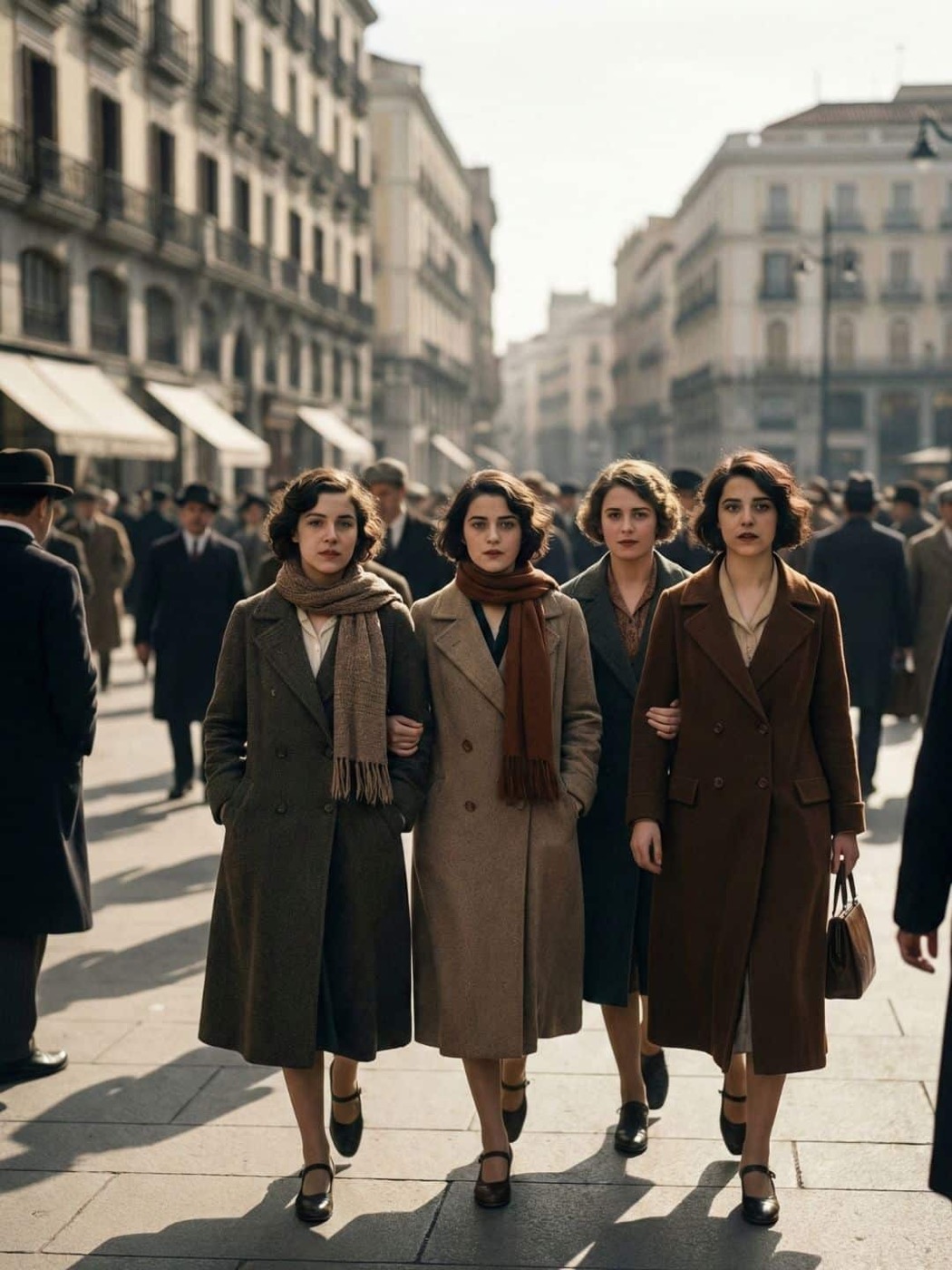
If you’re searching for 'las sinsombrero madrid route', you probably suspect something: Madrid is full of plaques, statues and male surnames… but beneath it lies another city. One that was written in the shadows, spoken softly in cafés where a brilliant woman had to 'ask permission' just to exist. And yet, she did.
Today, we’re walking with Concha Méndez and Las Sinsombrero: creators of the Generación del 27 who refused the roles of 'muse' or 'footnote'. They did something else entirely: they wrote, published, travelled, broke conventions and, when necessary, survived the silence of exile.
Concha Méndez: when 'being modern' was a risky sport
Concha Méndez was born in Madrid in 1898 and was a poet, playwright, editor and screenwriter. These aren’t just nice labels: they’re a list of professions that, in her time, came with closed doors. Even so, she pushed through. In 1919, she met Luis Buñuel, and that connection with Madrid’s artistic scene became a turning point in her life. Concha’s rebelliousness wasn’t a pose: it was her persistence. She published poetry, wrote plays, ventured into cinema (her timeline includes a screenplay from 1927) and, most importantly, understood a key idea: without publishing, there’s no movement. Because creating isn’t enough; you have to print, circulate and bring voices together.
'Sinsombrero' wasn’t a fashion statement: it was a public challenge
The (real) founding myth of Las Sinsombrero isn’t just a slogan for a T-shirt: it’s a scene played out on the street. In 1920s Madrid, for a woman to remove her hat in public was to step out of the social script. It’s said that Maruja Mallo and Margarita Manso walked through Puerta del Sol without hats (accompanied by men from the artistic circle) as a provocative gesture against the norm.
That gesture would later give its name to a constellation of female creators linked to the Generación del 27: thinkers, artists and writers who were essential… and then made invisible.
The printing press as a trench: publishing is also writing
Concha didn’t just sign books: she built platforms. In 1932, alongside Manuel Altolaguirre, she founded a printing press and launched the magazine Héroe.
Later, the map shattered: war and exile. In 1939, she settled in Havana, where she created the printing press La Verónica in the context of exile (though other sources link it to her earlier stage in Madrid before continuing abroad). The key idea here is this: Concha turned printing into resistance. Printing meant leaving evidence, saving texts and sustaining a cultural network when everything else was falling apart.
The great trick of history: erasing women 'quietly'
Many of them weren’t censored solely by politics. They were erased by habit: anthologies with the same repeated names, photos without captions, biographies reducing them to 'partners of'. That’s why this route isn’t just about 'pretty places': it’s about picking up the thread.
And now, here’s a short (but meaningful) route to walk through this rebellious Madrid.
Las Sinsombrero: a short literary route through Madrid (6 stops)
Realistic duration: 2–3 hours, including stops. Pro tip: do three stops in the morning and three in the afternoon. Madrid is best enjoyed this way.
Pause for a moment in the centre of the noise and think the opposite: here, a small gesture (removing a hat) could ignite an entire city. You’re not 'seeing' a monument: you’re standing on a social stage where female freedom was a provocation.
Walk to the Casa de las Siete Chimeneas (Plaza del Rey, 1). It was home to the Lyceum Club Femenino, a key space for women to gather, organise cultural activities and build networks in a capital that didn’t make it easy.
Insider tip: this building has restricted access (administrative use), so your visit is external. Take your time with the façade and reflect on what it meant to 'have a room of one’s own' in 1926.
The Ateneo de Madrid (C/ Prado, 21) is a classic of Madrid’s intellectual life: conferences, a library, debates. Enter with the respect due to a 'civil temple'. Its opening hours are generous (until late), and it often hosts cultural events. If you’re drawn to the Sinsombrero vibe, check the programme and attend a talk: you’ll understand why these spaces were so vital for intellectual 'existence'.
Head up to Recoletos and visit the Biblioteca Nacional de España (Paseo de Recoletos, 20–22). It’s the perfect place for this theme: because here, culture is archived… and decisions are made about what gets consulted. Entry to exhibitions is available during generous hours (including Sunday mornings).
The Gran Café de Gijón is an icon of literary gatherings, but take note: its reopening is announced for March 2026. In February, you’ll have to settle for seeing it from the outside and understanding its symbolism: the café as an emotional office for writers.
Head down to Retiro and finish at the Cuesta de Moyano, Madrid’s most bookish street. The bookstalls open morning and afternoon (roughly 9:30–13:30 and 16:30–19:00). The joy here isn’t 'buying': it’s searching. Ask for out-of-print editions or poetry from the Generación del 27. And if you’re on a tight budget, some stalls offer books from as little as €3 (or even less).
The city that tells you another version of yourself
Madrid isn’t just about 'what to see': it’s about which story you choose to believe. Concha Méndez and Las Sinsombrero leave you with a clear clue: culture isn’t only made by the names in the textbooks, but by those who dare to take up space.
Madrid isn’t just about 'what to see': it’s about which story you choose to believe. Concha Méndez and Las Sinsombrero leave you with a clear clue: culture isn’t only made by the names in the textbooks, but by those who dare to take up space.
Take the short route. Hold onto one idea. And take a book from Moyano as proof.
Blog
Sigue leyendo
Madrid con bajo presupuesto: cómo disfrutar la ciudad sin gastar de más
Descubre cómo disfrutar Madrid con bajo presupuesto: alojamiento, planes gratis y dónde comer barato. Consejos prácticos desde el centro de Malasaña.
Aviso amarillo en Madrid: la AEMET activa la alerta por temperaturas de hasta 38º
La AEMET activa el aviso amarillo en Madrid por temperaturas que alcanzarán los 38º. Consejos, planes y cómo moverse desde Malasaña.
Dónde dormir en Malasaña: opciones para todos los presupuestos
Descubre dónde dormir en Malasaña, desde opciones cómodas y accesibles como Adventure Hostel Madrid hasta todo lo que el barrio ofrece a pie de calle.