

Blog
Cercanías: Line C-5 requires transfer at Atocha
Cercanías line C-5 changes on October weekends. Learn about schedules, alternatives, and tips to navigate efficiently from Malasaña.
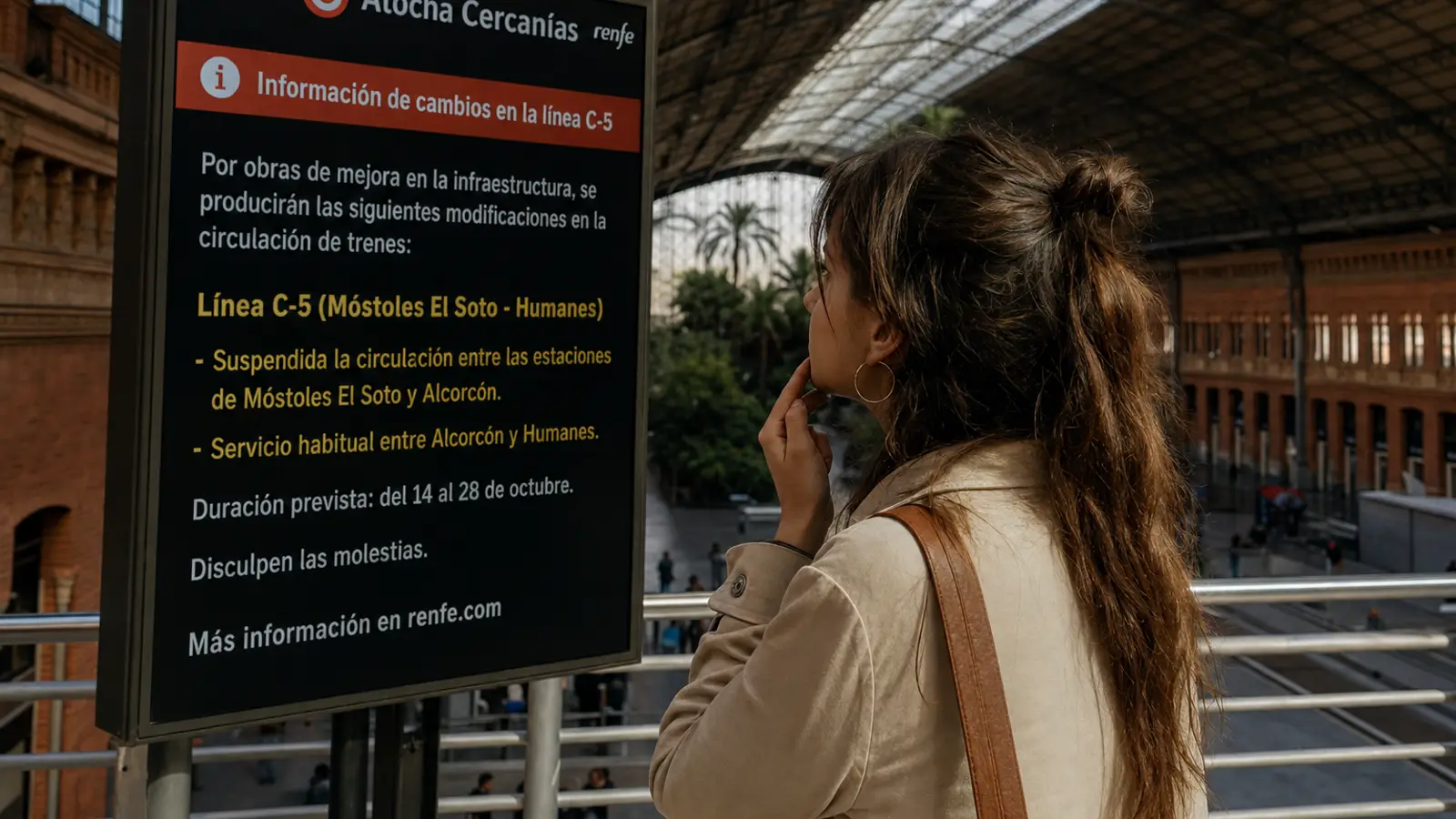
Cercanías line C-5 will require transfers at Atocha on October weekends due to maintenance. Here's how to navigate the changes and explore alternatives.
What’s happening on Cercanías line C-5?
Here's the deal. On every weekend in October, starting from the 7th, the C-5 line shuts down between Embajadores and Laguna stations due to track improvements. Trains will still run, but in two separate chunks: Móstoles-El Soto to Laguna, and Embajadores to Humanes. You'll have to get off at Atocha and switch trains to connect the two.
This disruption is part of Renfe's ongoing efforts to modernize the Cercanías network. The goal is to improve reliability, safety, and overall service quality. While inconvenient in the short term, these upgrades are expected to enhance the travel experience for thousands of daily commuters.
The works also aim to address long-standing issues such as delays and overcrowding, which have been a common complaint among users. By replacing outdated infrastructure and introducing new technology, Renfe hopes to create a more efficient and sustainable transport system for Madrid and its surrounding areas.
How does this impact you if you’re in Malasaña?
From our front door on Calle del Pez, your nearest Cercanías access is Sol. It's a 12-minute walk, or a 5-minute walk to Tribunal to catch Metro Line 1 one stop to Sol. Guests ask us this almost daily at reception. Once you're at Sol station, just remember to factor in that Atocha transfer if you're heading south on the C-5.
If you're planning to visit destinations like Móstoles, Fuenlabrada, or Humanes, the transfer at Atocha will add some extra time to your journey. For example, a trip to Móstoles-El Soto, which usually takes around 30 minutes, may now take closer to 50 minutes. It's a good idea to leave a bit earlier than usual to account for potential delays.
For those staying in Malasaña and looking for alternative ways to explore the city or its outskirts, planning ahead is key. Consider using apps like Google Maps or Citymapper to find the fastest routes and real-time updates on public transport. These tools can help you avoid unnecessary stress and make your journey smoother.
Alternatives to move around Madrid
Don't want the hassle of the C-5 transfer? No problem. The Metro is your best bet for getting around the city centre. From Tribunal station you have Line 1 and 10, and from Noviciado you have Line 2. You can get almost anywhere. Buses are another solid option; EMT lines 1, 3, and 147 cut right through our neighbourhood, connecting you to other key spots.
For those heading to the southern suburbs, consider taking Metro Line 12 (Metrosur) if it's convenient for your destination. Alternatively, EMT buses like the 35 or 118 can connect you to areas like Carabanchel and Legazpi, bypassing the need for a train altogether. While these options may take slightly longer, they eliminate the need for a transfer at Atocha.
Another option is using Madrid's extensive bike-sharing program, BiciMAD, which allows you to explore the city at your own pace. While not ideal for long distances, it's a great way to navigate shorter trips within the city. Additionally, taxis and ride-sharing services like Uber and Cabify are widely available and can be a convenient alternative for those who prefer door-to-door service.
Bottom line for October weekends: add 20 minutes to any C-5 train journey.
How much extra time should you allow?
Realistically, the transfer at Atocha will add 10 to 20 minutes to your trip, depending on how the train times line up. A trip from Sol to an outlying town like Móstoles or Fuenlabrada will therefore take you between 45 and 60 minutes total. Always double-check the latest schedules on the Renfe app before you leave. Always.
If you're traveling during peak hours, the added congestion at Atocha could mean slightly longer transfer times. Make sure to plan accordingly, especially if you have a tight schedule or a connection to catch. For peace of mind, consider traveling outside of peak times when possible.
For those who rely on Cercanías for daily commutes, it might be worth exploring monthly or weekly travel passes that include unlimited rides on both trains and buses. These passes can save you money and make it easier to adapt to the temporary changes without worrying about individual ticket costs.
What works are being carried out?
So, why the disruption? Renfe is upgrading the tracks and signals. It's short-term pain for a long-term gain in reliability and safety. The good news is that everything is scheduled to be back to normal by November. We'll see.
The maintenance includes replacing old tracks, installing modern signaling systems, and improving station infrastructure. These upgrades are part of a broader initiative to make the Cercanías network more efficient and environmentally friendly. Once completed, passengers can expect smoother rides, fewer delays, and enhanced safety features.
Additionally, the works aim to reduce the environmental impact of the Cercanías network by incorporating energy-efficient technologies and materials. This aligns with Madrid's broader goals of promoting sustainable urban mobility and reducing carbon emissions across its public transport systems.
Tips for a smoother journey
To make your trip as hassle-free as possible, here are some tips: First, download the Renfe app for real-time updates on train schedules and platform changes. Second, consider traveling with a light backpack or bag to make transfers easier. Third, if you're new to Atocha station, give yourself a few extra minutes to navigate its layout—it can be confusing for first-timers.
If you're traveling with kids or in a group, plan your route in advance and stick together during transfers. Atocha can get crowded, especially on weekends, so keeping an eye on your belongings is also a good idea. Lastly, if you're unsure about your route, don't hesitate to ask Renfe staff for assistance—they're usually stationed near the platforms and are happy to help.
For those who prefer a more relaxed journey, consider traveling during off-peak hours when stations and trains are less crowded. This can make the experience more enjoyable and reduce the stress of navigating through busy areas like Atocha. Additionally, packing a book or downloading a podcast can help pass the time during longer trips.
Blog
Sigue leyendo

Cómo moverte fácil y barato por Madrid desde Malasaña
Descubre cómo moverte por Madrid desde Malasaña: metro, autobuses, bicis y tarifas. Opciones económicas para llegar a cualquier rincón de la ciudad.
Cercanías: la línea C-5 obliga a hacer transbordo en Atocha
La línea C-5 de Cercanías sufre cortes los fines de semana de octubre por obras. Descubre cómo afecta a tus desplazamientos y qué alternativas tienes.

Planes nocturnos en Madrid: qué hacer después de cenar
Explora los mejores planes nocturnos en Madrid tras la cena: bares icónicos, música en directo, rutas culturales, terrazas con vistas y experiencias únicas.